
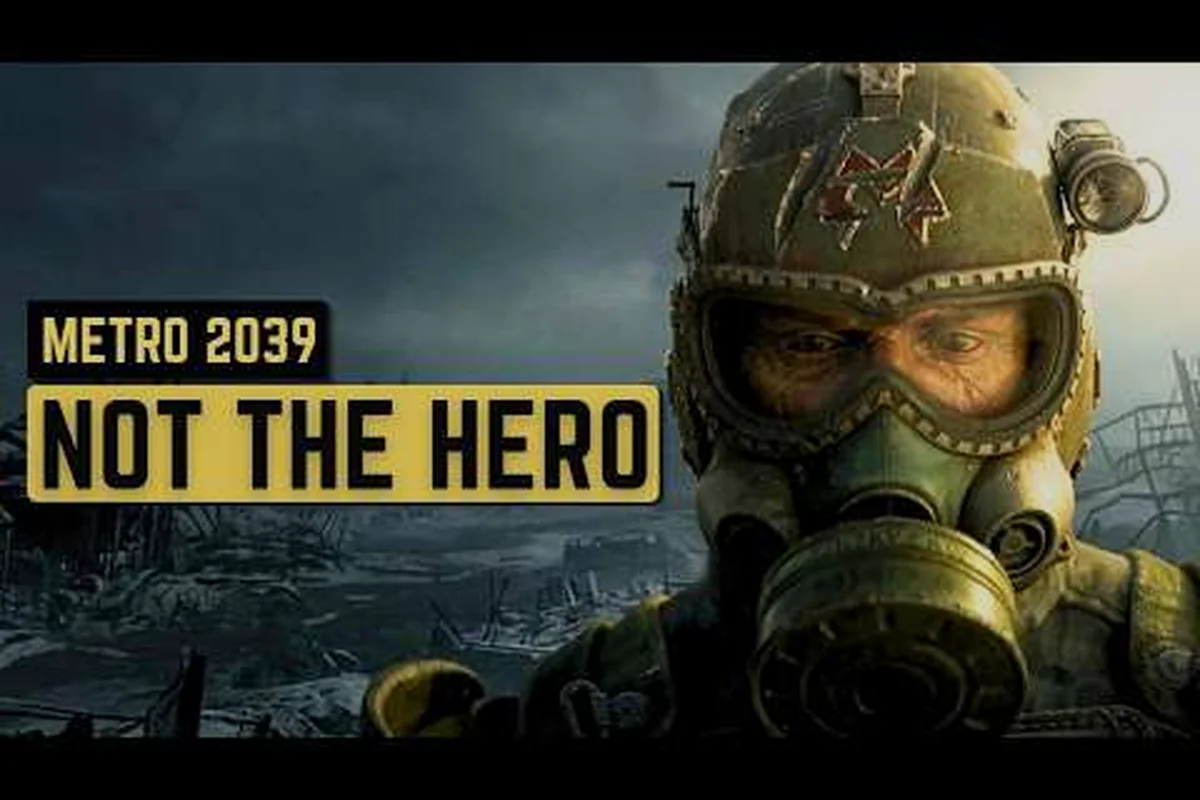
The most compelling METRO 2039 story theories emerging from the community center on one figure: Hunter, the fanatical Spartan who unifies the last survivors under a single iron fist. While the franchise has always explored moral gray zones, the official description of his Novoreich regime ruling through propaganda and fear marks a dramatic tonal shift for the series. Understanding these theories matters because they reveal how 4A Games plans to challenge everything we thought we knew about the Metro's heroes, and they hint at a narrative that could redefine the franchise's identity when it launches in February 2027.
The Novoreich Regime Theory: Hunter's Descent Into Tyranny
The most widely discussed metro 2039 story theories revolve around Hunter's transformation from the stoic Spartan we met in Metro 2033 into the authoritarian figurehead of the Novoreich. According to the official METRO 2039 website, the game presents a world where the last survivors are finally united by a single leader who subjugates the population in the name of a new war for the surface. This is a radical departure from the fractured, independent stations of previous entries, and it raises uncomfortable questions about how freedom gets traded for security.
The theory posits that Hunter's descent follows a classic authoritarian arc: he starts with noble intentions, consolidates power to fight a genuine threat, then slowly tightens control as opposition emerges. Community analysis of the trailer footage supports this reading, showing propaganda posters bearing Hunter's likeness and armed Spartan patrols moving through civilian areas. The cost of silence becomes a recurring motif, suggesting that dissent is met with harsh consequences rather than dialogue.
| Regime Element | Previous Metro Games | METRO 2039 Novoreich |
|---|---|---|
| Leadership style | Council-based, factional | Single charismatic dictator |
| Information control | Limited, station rumors | State propaganda apparatus |
| Military role | Defensive, scattered | Centralized enforcement |
| Citizen rights | Informal, negotiable | Subjugated, fear-based |
| Surface policy | Exploration expeditions | Unified military campaign |
What makes this theory particularly compelling is how it inverts the series' established moral framework. Previous games positioned the Rangers as protectors of the weak, but the Novoreich theory suggests that protection comes with strings attached. The horrors of tyranny theme appears to be the game's central thesis, and it forces players to question whether survival justifies the erosion of human dignity.
The Stranger Theory: Who Is the Protagonist Really?
The Stranger's Arsenal: Misfires, Maintenance, and Survival
The Xbox Wire gameplay breakdown reveals a crucial mechanical detail: The Stranger's weapon misfires during a Nosalis attack, directly tying the narrative to survival mechanics. This isn't a scripted failure; it's a demonstration of "ammo and maintenance pressure." Hand-crafted weaponry means degradation is a constant threat, forcing players to scavenge for parts and manage resources carefully. The escape using a "knife finisher and a closing heavy door" highlights a desperate, improvisational combat style. This suggests the game will prioritize tension and resource scarcity over the power fantasy of Metro Exodus's later-game arsenal.
From Exodus to 2039: The Narrative Bridge of Artyom's Legacy
Set four years after Metro Exodus (2019), METRO 2039 must reconcile the open-world ending with a return to Moscow's "tight tunnels." The community on r/metro questions how this sequel connects to the established canon. The presence of Hunter, a character presumed dead, suggests a narrative pivot away from Artyom's direct journey. This theory posits that the game explores the consequences of Exodus's ending—the discovery of a habitable surface—by showing how that hope is perverted into a new, authoritarian war. The "darker" story, per Dmitry Glukhovsky, likely stems from the failure of that initial freedom.
One of the most persistent metro 2039 fan theories concerns the identity of the player character, referred to as The Stranger in official materials. The Xbox First Look recap from Xbox Wire showed gameplay footage featuring hand-crafted weaponry and a diegetic watch-based UI, but deliberately avoided revealing the protagonist's face or backstory. This secrecy has fueled speculation that The Stranger is someone we already know from the series.
The leading theory suggests The Stranger could be a former Spartan who rejected Hunter's new order, making the game a narrative about resistance from within. Another popular interpretation positions the protagonist as a blank slate whose actions will determine whether the Novoreich stands or falls, which would explain why 4A Games has kept their identity hidden. The waking nightmares sequences shown in the reveal trailer hint at a traumatic past that could connect to events from Metro Exodus, though the exact nature of that connection remains unclear.
| Theory | Supporting Evidence | Counter-Evidence |
|---|---|---|
| Exiled Spartan | Familiar weapon handling, tactical knowledge | No Ranger insignia visible |
| Newcomer from surface | Unfamiliar with station customs | Too comfortable with tunnel navigation |
| Artyom's successor | Narrative continuity, thematic inheritance | Different voice actor, new perspective |
| Player-created character | No dialogue shown, customizable appearance | Story-driven franchise precedent |
The ambiguity here is clearly intentional, and it serves the game's thematic goals. If The Stranger is meant to represent the player's own moral compass, then the choices they make against the Novoreich carry more weight than they would with a predefined protagonist. This theory aligns with the price of freedom theme that executive producer Jon Bloch emphasized in interviews, suggesting that player agency will be central to the narrative experience.
The Surface Enemy Theory: What Drives the New War?
Perhaps the most speculative metro 2039 spoiler discussion centers on the nature of the enemy that justifies the Novoreich's militarization. The official description mentions a dark and terrifying enemy on the surface, but provides no concrete details about what this threat actually is. This has spawned multiple competing theories within the community about what awaits beyond the tunnels.
The most popular theory suggests the enemy is a mutated hive-mind organism that has evolved to dominate the surface, making the Metro's tunnels the last defensible position. This would explain the regime's urgency and its willingness to sacrifice individual freedoms for collective survival. A competing theory proposes that the enemy is actually other human survivors who have formed their own authoritarian state, which would create a dark mirror to the Novoreich and raise uncomfortable questions about whether the regime is fighting a real threat or a manufactured one.
The trailer's combat sequence, where The Stranger's weapon misfires as Nosalises attack, hints at a different kind of pressure entirely. The ammo and maintenance pressure shown in that footage suggests that resources are scarcer than ever, which could mean the surface war is not going well. If the Novoreich is losing, that would explain the increasing authoritarianism as a desperate measure rather than a calculated power grab. That footage suggests that resources are scarcer than ever, which could mean the surface war is not going well, and if the Novoreich is losing, that would explain the increasing authoritarianism as a desperate measure rather than a calculated power grab—a grim dynamic we break down further in our Metro 2039 Story Trailer Analysis, where the trailer’s visual cues point to the same collapse of military confidence.
The Book Connection Theory: How Does This Fit the Canon?
The Novoreich Propaganda Machine: How Hunter's Regime Controls the Metro
Hunter's regime in 2039 doesn't just rely on force; it weaponizes information. The official Deep Silver description confirms the Novoreich rules through "propaganda and fear," subjugating the population to justify a new surface war. This mirrors the Spartan Order's historical control in previous games, but escalates it to a totalitarian state. The regime's narrative frames the surface enemy as "dark and terrifying," a deliberate tactic to consolidate power and suppress dissent. This theory suggests the game's core conflict is ideological, with the metro's stations becoming isolated cells of manipulated belief.
The Diegetic Watch: A UI That Binds You to the World
The decision to use a "diegetic watch-based UI instead of a traditional HUD" is a significant shift in player immersion. Unlike the minimalist HUD of Metro Exodus, this interface forces players to physically check their wrist, creating a moment of vulnerability. This mechanic likely ties into the "cost of silence" theme, as checking your watch for radiation or gas levels could expose you to danger. It's a deliberate design choice that reinforces the setting's harsh reality, making every piece of information a conscious, in-world action rather than a passive on-screen readout.
Longtime fans have been debating how METRO 2039 connects to the broader literary universe, and this remains one of the most active metro 2039 story theories in community forums. The game is set four years after Metro Exodus, but the involvement of book author Dmitry Glukhovsky suggests a deeper narrative connection to the source material. According to Wikipedia's coverage of METRO 2039, Glukhovsky described the narrative as darker than anything the series has seen before, which implies a significant tonal evolution.
The theory proposes that the game draws from the expanded universe novels that explore the Metro's political evolution, particularly those dealing with unification attempts and their consequences. The Novoreich could be a synthesis of several fictional regimes from the books, combined into a single cautionary tale about the dangers of absolute power. This would explain why the game feels like a departure from the previous entries while still maintaining thematic continuity.
| Canon Element | Metro 2033 | Metro Last Light | Metro Exodus | METRO 2039 |
|---|---|---|---|---|
| Primary threat | Dark Ones | Reich/Red Line | Surface mutants | Novoreich + surface enemy |
| Protagonist | Artyom | Artyom | Artyom | The Stranger |
| Setting | Moscow tunnels | Moscow tunnels | Russian wasteland | Moscow tunnels |
| Moral complexity | Moderate | High | High | Very high |
| Political focus | Faction conflict | Faction conflict | Survival | Authoritarianism |
The return to Moscow's tight tunnels after Exodus's open world has generated significant discussion, with some players viewing it as a regression and others as a deliberate narrative choice. The claustrophobic setting amplifies the sense of oppression that the Novoreich represents, making the tyranny theme feel more immediate and personal than it would in an open environment. This theory suggests that the setting is not just a return to form but a thematic necessity.
The Moral Choice Theory: Can You Resist the Regime?
The most gameplay-focused metro 2039 fan theories examine how player choices will interact with the narrative's political themes. The game appears to be structured around a fundamental conflict: do you support the Novoreich's war effort to ensure humanity's survival, or do you resist its authoritarian methods even at the cost of security? This is a much more sophisticated moral dilemma than the binary choices of previous games.
The theory proposes that the game tracks your compliance with the regime through multiple systems, including how you interact with propaganda, whether you report dissidents, and how you respond to orders from Spartan commanders. These small choices would accumulate over the course of the game, leading to different endings that reflect the consequences of your actions. The consequences of war theme suggests that there are no clean victories, only different kinds of loss.
-
Compliance path: Follow orders, gain access to better equipment, but watch the regime grow more oppressive
-
Resistance path: Help dissidents, lose official support, but build a network of allies
-
Underground path: Avoid both factions, focus on personal survival, but lose narrative context
-
Reform path: Work within the system to change it, maintain access while pushing back
The community has drawn parallels to the moral systems of other immersive sims, but the Metro franchise has always handled morality with more subtlety than simple good-versus-evil mechanics. The war themes in METRO 2039 appear designed to make players uncomfortable with every choice, forcing them to weigh abstract principles against concrete survival needs. This theory suggests that the game's replayability will come not from different content paths but from different moral interpretations of the same events.
How the Trailer Confirms and Complicates These Theories
The official release window trailer, which premiered at the Xbox Games Showcase 2026 and is available on IGN's YouTube channel, provides crucial evidence for evaluating these theories. The 90-second footage shows the ruined station, the watch-based UI, and the combat sequence with misfiring weapons, but it also contains subtle details that community members have been analyzing frame by frame.
The trailer's propaganda imagery is particularly telling, showing Hunter's face on posters with slogans that emphasize unity and sacrifice. This confirms the Novoreich's propaganda apparatus but leaves open whether it represents genuine belief or cynical manipulation. The trailer spoilers reveal that the station is in poor condition, with failing infrastructure and desperate civilians, which supports the theory that the regime is struggling to maintain control.
| Trailer Detail | What It Shows | Theory Implication |
|---|---|---|
| Watch-based UI | Diegetic interface, no HUD | Immersion-focused design |
| Misfiring weapon | Maintenance pressure | Resource scarcity theme |
| Knife finisher | Close-quarters combat | Personal, brutal encounters |
| Closing heavy door | Defensive posture | Station under threat |
| Propaganda posters | Regime messaging | Authoritarian control |
The trailer also confirms that the game will feature the tight, claustrophobic tunnels that defined the early series, which supports the theory that the narrative is deliberately returning to the series' roots. The combination of familiar setting and unfamiliar political structure suggests that 4A Games is using the Metro's iconic environment to explore new thematic territory, and the community's analysis of these details continues to evolve as more footage becomes available.
Frequently Asked Questions
What is the Novoreich in METRO 2039?
The Novoreich is the authoritarian regime established by Hunter, a fanatical Spartan who unifies the last survivors of nuclear war under his leadership. According to the official game description, the regime rules through propaganda and fear, subjugating the population while preparing for a new war against a mysterious surface enemy.
Is Artyom the protagonist of METRO 2039?
No, the protagonist is referred to as The Stranger in official materials, and their identity remains deliberately ambiguous. While some metro 2039 fan theories suggest a connection to Artyom or other established characters, 4A Games has not confirmed any relationship to previous protagonists.
How does METRO 2039 connect to the previous games?
METRO 2039 is set four years after the events of Metro Exodus and returns to Moscow's tunnels. The game involves book author Dmitry Glukhovsky, who described the narrative as darker than anything the series has seen before, suggesting a significant thematic evolution from previous entries.
What is the dark enemy on the surface?
The official description mentions a dark and terrifying enemy that justifies the Novoreich's militarization, but specific details remain unconfirmed. Community theories range from evolved hive-mind organisms to rival human factions, though no definitive answer has been provided by the developers.
Will player choices matter in METRO 2039?
Yes, player choices will matter, but they'll be filtered through the Novoreich's propaganda machine rather than offering simple moral binaries. The Moral Choice Theory section suggests resistance will hinge on small, diegetic acts—like the trailer's misfiring weapon—forcing you to weigh survival against freedom under Hunter's tyranny.