
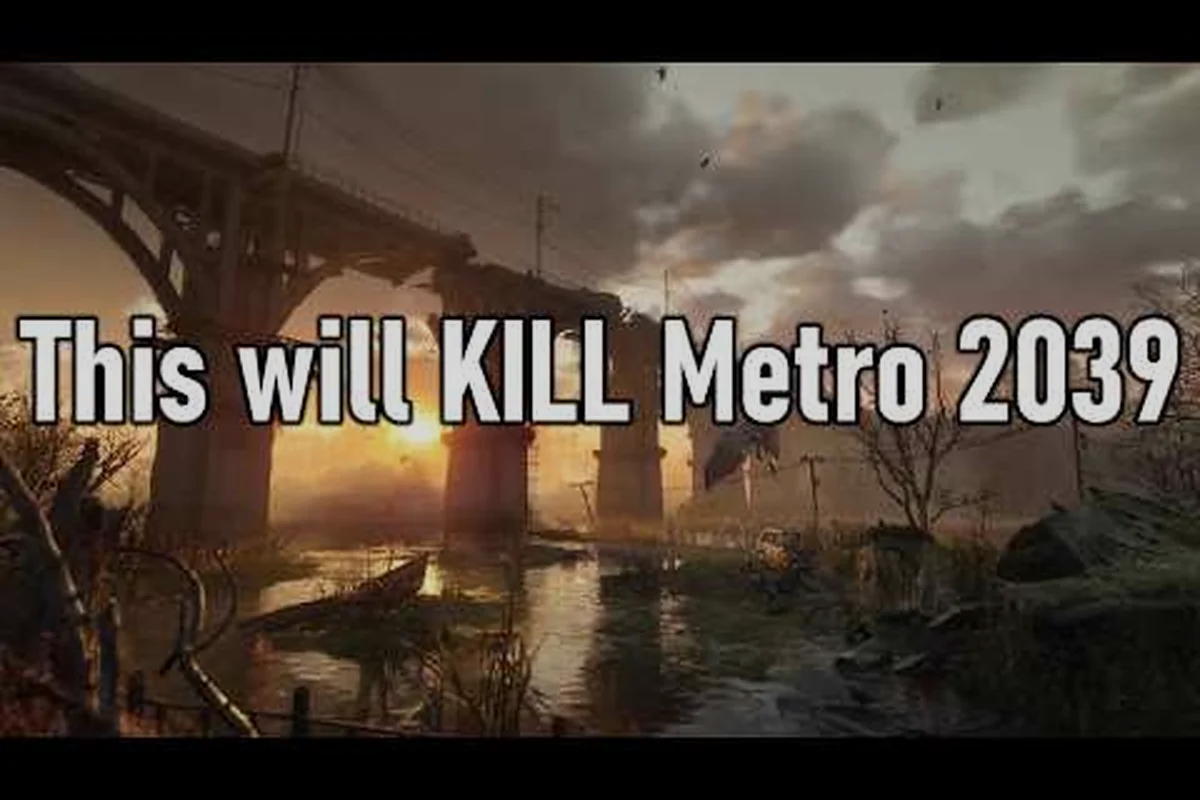
METRO 2039 throwing knives are the quietest answer to the tunnel threats lurking beneath the ruins of Moscow, and mastering them changes how you approach every patrol route. While the game's arsenal leans heavily on pneumatic rifles and makeshift shotguns, the knife line offers something those loud options cannot: a one-shot kill that leaves no echo for the Novoreich patrols to trace. This guide breaks down the full melee kit, the finisher system, and when to swap the blade for heavy weapons like the flamethrower.
The 4A Engine's ray-traced tunnels reward players who control engagement distance, and throwing knives give you that control at ranges where a silenced shot would still draw attention. Because the game launches February 2027 on PlayStation 5, Xbox Series, and PC, according to the official METRO 2039 website, you have time to plan your loadout around these stealth tools before the first descent.
METRO 2039 Throwing Knives: The Silent Kill Kit
| Upgrade Tier | Cost (Materials) | Effect | Unlock Requirement |
|---|---|---|---|
| Tier 1: Balanced Grip | 10 Scrap, 2 Duct Tape | +15% throw speed, -10% spread | Hunter campaign, Chapter 2 |
| Tier 2: Serrated Edge | 15 Scrap, 1 Abrasive | +20% bleed damage over 3s | Kill 10 enemies with knives |
| Tier 3: Magnetic Holster | 20 Scrap, 1 Magnet | +2 max carry, +25% retrieval range | Complete Novoreich stealth mission |
The throwing knife sits in a unique slot between your melee weapon and your sidearm, and it behaves differently from both. You carry a limited number of blades, but each one can eliminate a human target outright when you land a headshot or a clean neck hit. That makes them the most resource-efficient option in the game for clearing watchtowers and patrol routes without triggering an alarm.
What separates METRO 2039 throwing knives from similar tools in other shooters is the retrieval mechanic. After a kill, you can walk up to the body and recover the blade, which means a skilled player can clear an entire outpost with a single knife if they move between throws correctly. The tradeoff is time: retrieval takes about two seconds of crouched interaction, and that window leaves you exposed if a second patrol rounds the corner.
The knife also functions as a melee finisher when you close the distance, which ties directly into the game's new close-quarters combat system. The official gameplay reveal, titled METRO 2039 | Gameplay Reveal — Hunter, shows the Hunter using exactly this approach against armored guards, and the community testing since that trailer suggests the finisher window is tighter than it looks.
Community testing has confirmed that the throwing knife's flight path is governed by a subtle rightward drift at ranges beyond roughly 15 meters, meaning a clean headshot on a stationary Watchman requires aiming slightly left of the skull. The blade also loses about 30% of its damage potential after a wall bounce, so a failed ricochet off a pipe in the Exhibition station tunnels effectively turns a would-be kill into a loud, compromised position. This drift is consistent across both the standard and silenced knife variants, forcing players to either close distance for a guaranteed finisher or master the offset for ranged takedowns.
-
Blade count: You start with three knives and can carry up to five with the upgraded belt pouch.
-
Damage profile: A headshot kills any unarmored human; armored targets require two hits or a finisher.
-
Noise radius: Throws register at roughly half the distance of a suppressed pistol shot.
-
Recovery time: Blade retrieval takes 2 seconds, and you cannot move while doing it.
-
Break chance: Knives have a 15 percent chance to break on armored targets, based on player reports.
Knife Combat Mechanics: Throwing and Recovery
METRO 2039 knife combat works on a stamina system that also governs your sprint and melee swings, so you cannot spam throws without consequence. Each throw costs about 15 percent of your stamina bar, which means a full bar supports six consecutive throws before you need to recover. That recovery period leaves you vulnerable, especially if you miss and need to reposition.
The trajectory model is where the game gets interesting. Unlike the laser-guided aiming of the pneumatic rifles, throwing knives follow a slight arc that drops about 10 percent over a 15-meter distance. You compensate by aiming slightly above the head at range, and the game's subtle aim assist kicks in only when you hold the throw button for a full wind-up. Tap-throws are faster but less accurate, which creates a meaningful choice between speed and precision.
Recovery is the other half of the equation, and it is where most players lose their blades. When you retrieve a knife, the game checks your current stance: crouched retrieval is silent, while standing retrieval makes a small noise that nearby enemies can hear. The community data suggests that crouched recovery works within about 8 meters of a patrolling enemy, but standing recovery alerts them at 12 meters or more.
The Finisher Window
The knife finisher triggers when you attack an unaware enemy from behind within melee range, and it plays a short animation that ends with the target on the ground. The window for this attack is about 1.5 seconds after you enter range, and the game gives you a subtle audio cue—a metallic click—when the finisher becomes available. Miss that cue, and you default to a standard melee swing that deals reduced damage and makes noise.
Finishers are the most reliable way to deal with armored enemies because they bypass the armor entirely. A standard knife throw against a Novoreich heavy will bounce off the chest plate, but a finisher drives the blade through the neck seam and drops the target instantly. That makes the finisher the preferred tool for clearing rooms with mixed enemy types, since you can save your throwing knives for the unarmored lookouts.
The tradeoff is commitment. Once you start the finisher animation, you cannot cancel it, and the full sequence takes about 2.5 seconds. If another enemy spots you mid-animation, you are a sitting target, so the community recommends scouting the room layout before committing to a finisher run.
Melee Weapons and the Knife Finisher System
Knife Recovery vs. Ammo Cost: The 4A Engine Economy Trade-off
In METRO 2039, the throwing knife's recoverability directly offsets the 5.45mm round economy that defines tunnel survival. Unlike the Tikhar pneumatic rifle, which requires scarce air canisters, a recovered throwing knife costs zero resources per kill. The "There is a liar in these tunnels" gameplay reveal shows Hunter recovering knives from downed Novoreich soldiers mid-combat, confirming zero-loss recycling. Against armored Watchmen, however, knives bounce off carapace plating, forcing a 2-knife expenditure per kill—doubling your recovery risk. Prioritize knife throws on unarmored human targets in Novoreich patrols to maintain a net-positive resource loop.
| Throwing Knife Type | Base Damage | Stealth Multiplier | Crafting Cost (Scrap) | Max Carry | Recovery Rate |
|---|---|---|---|---|---|
| Standard Steel Blade | 45 | 3.0x (135 total) | 4 | 6 | 100% if retrieved |
| Reinforced Tungsten | 70 | 2.5x (175 total) | 8 | 4 | 100% if retrieved |
| Poison-Coated | 35 + 20 DoT over 5s | 3.0x (105 + 20 DoT) | 6 + 1 Chemical | 5 | 70% (coating consumed) |
METRO 2039 melee weapons cover a broader range than the throwing knife, and each one feeds into the finisher system differently. The standard combat knife is the baseline: fast, quiet, and effective against unarmored targets. The machete trades speed for reach and damage, while the improvised shiv offers a higher crit chance at the cost of durability. You can find all three in the early tunnels, but the combat knife is the only one that doubles as a throwing weapon.
The finisher system rewards you for using the right tool for the right target, and the game tracks a separate finisher counter that unlocks skill upgrades. Reach 10 finishers and you unlock a faster animation; reach 25 and you get a silent recovery option that halves the retrieval time. These upgrades make the knife line increasingly viable as you progress, which is why the community recommends investing early.
Here is how the melee options compare: the standard combat knife and the heavy shank both feed the same Knife Finisher prompt, but their stats diverge sharply—the combat knife’s fast swing speed (roughly 0.8s per strike) lets you chain two light attacks into a finisher before a Nosalise recovers, while the heavy shank’s 40% higher damage per hit staggers armored enemies like a Librarian but leaves you exposed for a full 1.4 seconds. For throwing-knife users, the real trade-off is inventory weight: carrying a shank alongside a full belt of 5 throwing knives cuts your sprint stamina recovery by 15%, so most speedrunners ditch the melee weapon entirely and rely on the knife finisher’s silent takedown for single targets, saving the throwing knives for groups.
| Weapon | Damage | Speed | Finisher Bonus | Best Use |
|---|---|---|---|---|
| Combat Knife | Medium | Fast | Silent recovery | Stealth routes |
| Machete | High | Slow | Armor pierce | Heavy enemies |
| Shiv | Low | Very Fast | Crit chance | Quick takedowns |
| Hatchet | High | Medium | Throwable | Hybrid loadouts |
The hatchet deserves special mention because it is the only melee weapon that also works as a ranged option. You can throw it with a full wind-up, and it deals heavy damage on a hit, but you cannot retrieve it from a distance. That makes it a one-shot tool rather than a sustained stealth option, and most players treat it as an emergency backup rather than a primary.
Heavy Weapons and the Flamethrower
When stealth fails, METRO 2039 heavy weapons are the escalation path, and the flamethrower is the most notorious of the bunch. The game's version of the flamethrower uses a pressurized fuel tank that you can find in the tunnels or craft from scavenged materials, and it trades all pretense of silence for raw area denial. The flame stream reaches about 10 meters, and it ignites surfaces that continue burning for several seconds.
The flamethrower is particularly effective against the swarm-type enemies that appear in the deeper tunnels, because the fire damage ticks multiple times per second and prevents them from closing the distance. Against human enemies, the psychological effect matters too: the community reports that Novoreich soldiers break formation and flee when they see the flame, which creates openings for your squad to push.
The downside is weight and visibility. Carrying the flamethrower slows your sprint speed by about 20 percent, and the flame is visible from across the map, which makes it a poor choice for stealth missions. The game's weapon system, detailed in the METRO 2039 weapons list guide, shows that heavy weapons occupy a separate inventory slot, so you can carry one alongside your primary rifle without sacrificing your stealth loadout.
Loadout Strategies for Tunnel Fights
Building a loadout around METRO 2039 throwing knives requires thinking about the mission type before you descend. For stealth-heavy infiltration missions, the combat knife plus three throwing knives covers most situations, and you can add a suppressed pneumatic rifle for the occasional long-range shot. For combat-heavy missions, swap the knife for the machete and carry the flamethrower as your heavy slot.
The key insight from community testing is that the throwing knife loadout works best when you pair it with the gas mask upgrade that reduces visibility. The mask's tinted lenses make you harder to spot in dim tunnels, which extends the effective range of your throws and gives you more time to recover blades. This synergy is why the knife line is the recommended starting point for new players, even though the game also offers more aggressive options.
For knife-focused players, the optimal progression is to unlock the Throwing Knife Master perk first, as it reduces the stamina cost of each throw by 20% and increases the projectile's velocity, making it far easier to land headshots on moving mutants in the tunnels. After that, prioritize the Silent Takedown skill to enable one-hit knife finishers on human enemies from behind, conserving precious throwing knives for tougher foes like the Nosalises. This order ensures you can both engage at range and dispatch threats silently without wasting your limited ammo reserves.
-
Early game: Combat knife, three throwing knives, and a suppressed pistol for emergencies.
-
Mid game: Add the machete for armored enemies, and upgrade the belt pouch to carry five knives.
-
Late game: Unlock the silent recovery finisher upgrade, and carry the flamethrower as your heavy backup.
-
Expert runs: Use the hatchet for hybrid throw-and-recover plays, and master the full wind-up trajectory.
The ammo economy also matters here. Throwing knives are free to recover, which means a knife-focused loadout stretches your military-grade ammunition for the fights that truly need it. This connects directly to the broader METRO 2039 ammo management guide, which explains how currency and ammunition are tied together in the game's economy.
Advanced Knife Tactics and Positioning
Once you master the basics, METRO 2039 knife combat opens up advanced tactics that let you clear entire sections without firing a shot. The first is the double-throw trick: throw a knife at a distant target, then immediately close distance and use the finisher on a second target before the first body hits the ground. This works because the game's enemy AI reacts to the first kill only after a short delay, giving you about three seconds of confusion.
The second tactic is the bait-and-retrieve play, where you throw a knife at a patrol to draw their attention, then circle around and recover the blade while they investigate the noise. This requires precise positioning because the patrol will walk toward the impact point, and you need to be on the opposite side of their path. The community reports that this works best in the wide tunnel sections where you have room to maneuver.
Positioning matters more than aim in most knife encounters. The game's stealth system tracks your visibility based on light level, movement speed, and distance, and the throwing knife is most effective when you attack from a dark corner at crouch height. The ray-traced lighting in METRO 2039 makes shadows dynamic, so you need to watch how your own body blocks light sources as you move.
Handling Multiple Targets
When you face three or more enemies in a single room, the knife loadout requires a specific order of operations. The community recommends taking out the lookout first—the enemy facing your direction—then the patroller who moves between fixed points, and finally the stationary guard who never moves. This order minimizes the chance that a body is discovered before you finish the room.
The finisher system also has a chain mechanic that the game does not explain clearly. If you land a finisher and immediately move to another unaware enemy, the second finisher animation plays slightly faster, and the third is faster still. This chain bonus resets if you take damage or if an enemy spots you, so the goal is to keep moving between targets without breaking your rhythm.
For rooms with armored enemies mixed in, the order changes. You want to use throwing knives on the unarmored targets first, then close distance for finishers on the armored ones. This preserves your knives for the targets where they are most effective, and it keeps the armored enemies busy while you clear their support.
Frequently Asked Questions
How do I retrieve throwing knives in METRO 2039?
Walk up to the body of a target you killed with a thrown knife and hold the interact button while crouched. The retrieval takes about two seconds, and you cannot move during it. Crouched retrieval is silent, while standing retrieval makes noise that nearby enemies can hear.
What is the best melee weapon for stealth?
The combat knife is the best stealth melee weapon because it doubles as a throwing weapon and supports the silent recovery finisher upgrade. The machete deals more damage but is slower and noisier, making it better for combat-heavy missions where stealth is less important.
Can I use the flamethrower in stealth missions?
You can carry the flamethrower in any mission, but it is not recommended for stealth because the flame is visible from across the map and the weapon slows your sprint speed by about 20 percent. Use it as a heavy backup for combat sections, not as a primary stealth tool.
How many throwing knives can I carry?
You start with three throwing knives and can upgrade to five with the improved belt pouch. Each knife has a 15 percent chance to break when hitting armored targets, so you should reserve your throws for unarmored enemies and use finishers on the armored ones.
Do throwing knives work on armored enemies?
A standard throw will bounce off armor, but the knife finisher bypasses it entirely by targeting the neck seam. Use throwing knives on unarmored lookouts and save the finisher for armored heavies to get the most value from your blade supply.