
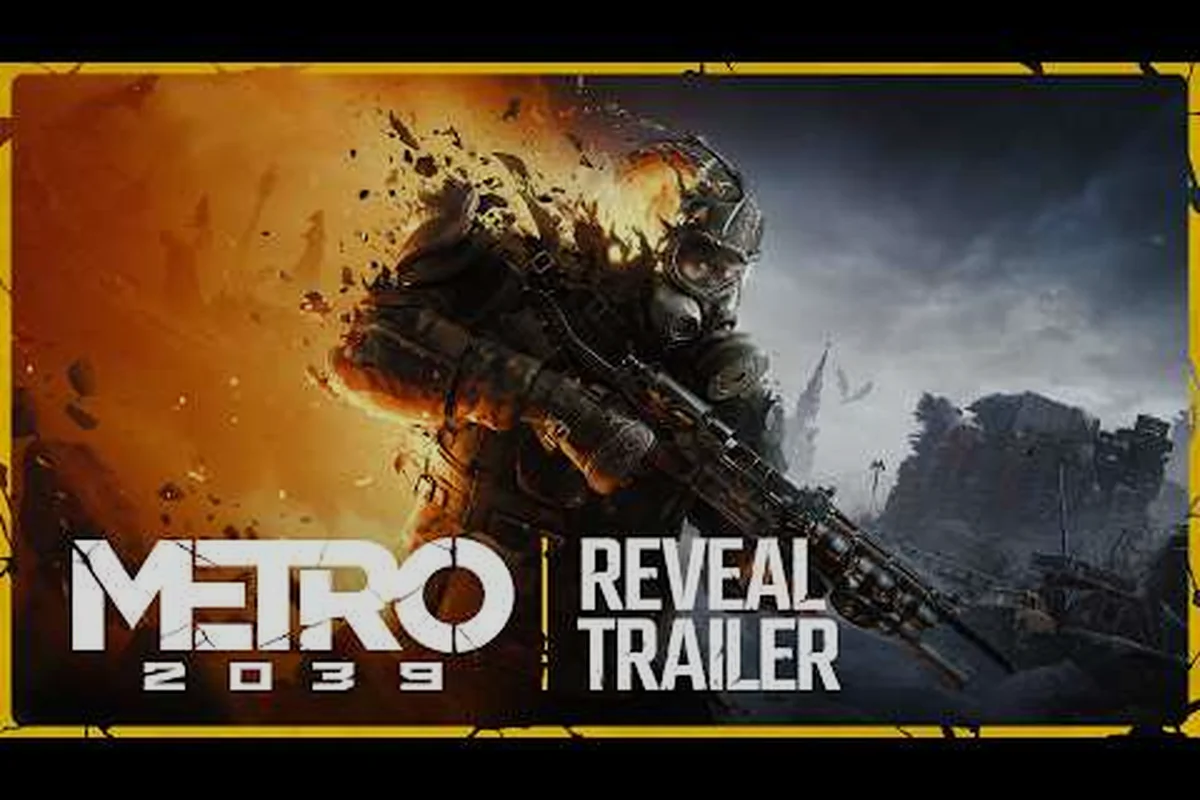
The METRO 2039 hunter leader stands at the center of the franchise's boldest narrative shift, transforming from a mysterious figure in the original novel into the fanatical Spartan commander who unites survivors under the Novoreich banner. This matters because 4A Games has confirmed the game introduces the series' first fully voiced protagonist, a decision that fundamentally changes how Metro stories are told while Hunter's return bridges the gap between the book canon and the game timeline. Get ready to explore how this new cast reshapes the wasteland.
The Rise of the METRO 2039 Hunter Leader
Hunter's Weapon Misfire: The Ammo Pressure Mechanic in the Gameplay Reveal
In the 2:52 "Gameplay Reveal — Hunter" trailer (video ID mAUfp7tP2bg), the combat sequence demonstrates a core survival mechanic: The Stranger's hand-crafted weapon misfires mid-combat as Nosalises swarm. This is not a scripted failure but a deliberate pressure system tied to ammo and maintenance. The misfire forces a knife finisher and a heavy-door escape, showing that weapon reliability degrades without upkeep. Unlike Metro Exodus's cleaning system, this iteration punishes neglect in real-time, making resource management a combat variable, not a menu chore.
The Novoreich Faction's Leadership Structure Under Hunter
Hunter's role as leader of the Novoreich faction redefines Metro's power dynamics. The r/metro community speculates on how his authoritarian past—seen in Metro: Last Light—translates to leading a faction built on order. Unlike Miller's Spartan Order, the Novoreich appears to centralize control around Hunter's survivalist ideology, potentially creating conflict with The Stranger's exile. This leadership is a narrative engine: Hunter's decisions likely drive the "cost of silence" and "price of freedom" themes outlined by executive producer Jon Bloch, making faction loyalty a moral choice rather than a gameplay alignment.
Hunter's transformation from the novel's enigmatic stalker into the Novoreich leader represents the most significant character evolution in Metro history. According to the official METRO 2039 website, the game is a brand-new entry with an original story from 4A Games written in collaboration with Dmitry Glukhovsky, not based on a specific book. This creative freedom allows the developers to explore Hunter's fanaticism in ways the novels never could, showing how his single-minded pursuit of humanity's survival curdles into something more authoritarian.
The hunter leader arc unfolds across the game's main campaign, where players witness his transformation through environmental storytelling and direct confrontation. Community reports from the r/metro subreddit indicate that fans are actively debating whether the reveal trailer spoiled major plot points about Hunter's role, with many theorizing that his leadership of Novoreich represents either salvation or a new tyranny depending on player choices.
What makes this iteration of Hunter particularly compelling is how 4A Games uses his established traits while subverting expectations: rather than the silent, stoic enforcer who vanished in Metro 2035's epilogue, this Hunter is forced into a vocal, morally compromised leadership role—directly mirroring Artyom's own transition to a voiced protagonist. His tactical ruthlessness, honed in the tunnels beneath the Moscow Metro, now collides with the political machinations of the Spartan Order and the Hanza's bureaucratic factions, creating a leader who must negotiate with the same corrupt powers he once executed without hesitation. This tension turns every dialogue choice into a referendum on whether the ends justify the means, a thematic weight that his previous appearances never carried.
-
Fanatical devotion becomes a double-edged sword, driving both heroic sacrifices and morally questionable orders
-
Spartan discipline transforms into rigid authoritarianism as the Novoreich's power grows
-
Survival instinct evolves into territorial aggression against rival factions
-
Mentor relationship with the new protagonist creates emotional stakes that the series has never explored before
The Novoreich settlement itself functions as a character in the story, with its hierarchy, customs, and internal conflicts reflecting Hunter's influence on every level. Players who want to understand the full scope of his impact should also examine the Stranger's connection to Hunter, which reveals how the new protagonist's past intertwines with the hunter leader's present.
The First Voiced Protagonist in Metro History
The metro 2039 first voiced protagonist metro milestone represents a deliberate break from series tradition, and 4A Games has explained this choice through the lens of narrative necessity rather than industry trend-following. Executive producer Jon Bloch described the game's themes as the consequences of war, the cost of silence, the horrors of tyranny, and the price of freedom, according to the Metro 2039 Wikipedia entry. A silent protagonist simply cannot carry those thematic weights when the story demands moral confrontation with Hunter's ideology.
The new protagonist, known as The Stranger in early promotional materials, speaks with a Ukrainian perspective that 4A Games emphasizes as central to the game's identity. The Xbox Wire first look recap notes that the studio is majority-based in Ukraine and the game is told from a uniquely Ukrainian viewpoint, which adds layers of meaning to every line of dialogue and every moral choice presented to players.
| Storytelling Element | Previous Metro Games | METRO 2039 |
|---|---|---|
| Protagonist voice | Silent (Artyom) | Fully voiced (The Stranger) |
| Dialogue choices | Limited binary options | Expanded moral dialogue system |
| Character perspective | Internal monologue only | External conversation and debate |
| Narrative authority | Player interpretation | Guided thematic direction |
| Emotional range | Implied through actions | Expressed through performance |
This shift affects gameplay mechanics beyond simple dialogue, because the voiced protagonist system enables new interaction types that were impossible in earlier entries. Players can now argue with Hunter during key confrontations, persuade Novoreich officials through verbal negotiation, and even lie about their past to gain faction trust.
The voice acting direction reportedly emphasizes authenticity over theatricality, with the Stranger's performance grounded in the exhaustion and determination that defines Metro's survivors. Community testing suggests that players who engaged deeply with Artyom's silent journey may find the transition jarring at first, but the writing team has structured early scenes to justify why this protagonist speaks when Artyom never did.
METRO 2039 New Cast and Returning Characters
The metro 2039 new cast balances fresh faces with carefully selected returning characters, though 4A Games has remained characteristically tight-lipped about which legacy figures will appear. What we know from the Xbox Wire recap is that the game features hand-crafted weaponry, a diegetic watch-based UI instead of a traditional HUD, and exploration of ruined stations, all of which suggest a return to the series' survival horror roots while the new cast drives fresh narrative dynamics.
The metro 2039 characters returning question has generated intense speculation, with the r/metro community debating whether Artyom, Miller, Khan, and Anna will appear after the events of Metro Exodus. The game's darker tone, which Glukhovsky described as darker than anything the series has seen before, implies that returning characters may face grim fates or morally compromised positions.
| Character | Status in METRO 2039 | Community Speculation |
|---|---|---|
| Hunter | Confirmed leader of Novoreich | Central antagonist or anti-hero |
| Artyom | Unconfirmed | Possible mentor figure or tragic absence |
| Miller | Unconfirmed | Legacy influence through Spartan doctrine |
| Khan | Unconfirmed | Mystical guide or philosophical foil |
| Anna | Unconfirmed | Emotional anchor or narrative casualty |
The metro 2039 artyom return question carries particular weight because his absence would mark the first Metro game without the series' traditional protagonist. Some community theories suggest that Artyom's fate is revealed through environmental storytelling rather than direct appearance, with the frozen stories approach that Andriy Shevchenko developed for level design staging rooms with items and bodies to tell micro-narratives about what happened to the previous generation of heroes.
The metro 2039 miller appear speculation centers on whether the former Spartan commander's legacy influences Hunter's leadership style. Given that Hunter was already a Spartan before Miller's time, his connection to the order runs deep, and players who want to trace these threads should examine how Khan's potential return might contextualize the supernatural elements of Hunter's rise to power.
Hunter's Leadership Style and Faction Doctrine
"Frozen Stories": Andriy Shevchenko's Level Design Philosophy
Level design in METRO 2039 abandons Exodus's open environments for Andriy Shevchenko's "frozen stories" approach—staging rooms with items and bodies to convey micro-narratives. This returns the series to confined spaces with denser environmental storytelling. For example, a ruined station explored in the reveal shows a watch-based UI (diegetic, no traditional HUD) that ties time pressure to exploration. Each room becomes a puzzle of context: a corpse's position, a scattered magazine, a half-eaten ration. This contrasts sharply with Exodus's sprawling maps, prioritizing narrative density over player freedom.
Glukhovsky's Exile and the Ukrainian Perspective in Storytelling
Dmitry Glukhovsky's return as co-writer, while living in exile from Russia, infuses METRO 2039 with a uniquely Ukrainian perspective, as 4A Games is majority-based in Ukraine. This is not a marketing detail but a narrative lens: the "horrors of tyranny" theme is grounded in real-world context, making the story darker than any prior entry. The collaboration ensures the original story—not based on a specific book—carries the author's voice while allowing 4A Games to craft a narrative that reflects their national experience. This shifts Metro's political allegory from generic post-apocalyptic survival to a pointed commentary on authoritarianism.
The Novoreich faction under Hunter's command represents a new political entity in the Metro universe, one that consolidates multiple stations under a single authoritarian vision. The gameplay reveal footage showcased Hunter's leadership style through environmental details, including Spartan insignia repurposed for Novoreich propaganda and watchtowers monitoring civilian movement between stations.
Hunter's military doctrine emphasizes several key principles that players will encounter throughout the campaign: aggressive reconnaissance, silent elimination, and strict resource conservation. Unlike Artyom's more improvisational approach, Hunter treats every Ranger patrol as a surgical operation—scouting ahead with his night-vision binoculars to mark Nosalis clusters before engaging, then using throwing knives or a suppressed Kalash to thin ranks without triggering a full alarm. His doctrine also mandates pre-combat dose administration of anti-radiation drugs before entering high-contamination zones, a habit that becomes critical when navigating the Novoreich tunnels where radiation spikes can reach 3.5 mSv/h. This tactical rigidity, while effective against mutants, creates friction with the new cast who favor stealth over Hunter's preference for overwhelming firepower, forcing players to adapt their playstyle to his command style.
-
Centralized command with Hunter making all strategic decisions personally
-
Resource rationing that prioritizes military expansion over civilian comfort
-
Territorial expansion justified as preemptive defense against mutant and bandit threats
-
Ideological purity enforced through propaganda and surveillance
-
Sacrifice acceptance that treats individual lives as expendable for collective survival
The hunter leader philosophy creates natural conflict with the Stranger, whose personal journey through the wasteland exposes the human cost of Novoreich's efficiency. Players who explore the character trailer analysis will notice that the promotional materials deliberately frame Hunter's speeches as both inspiring and unsettling, leaving viewers uncertain whether to root for or fear his vision.
The Novoreich military structure mirrors the Spartan order's hierarchy while expanding it to govern civilians, creating a society where every citizen has a military role and dissent is treated as desertion. This system produces tangible gameplay consequences, because player actions that undermine Novoreich authority trigger increasingly aggressive responses from Hunter's enforcers.
How the New Cast Reshapes Metro's Storytelling
The metro 2039 new cast fundamentally alters how the game communicates its narrative, moving away from the solitary introspection of previous entries toward a more dialog-driven experience. The voiced protagonist mechanic enables the Stranger to challenge Hunter's ideology directly, creating debate sequences that function as both character development and thematic exploration.
| Narrative Technique | Previous Games | METRO 2039 |
|---|---|---|
| Moral choices | Internal weighing | Open confrontation |
| Faction relationships | Observation | Active negotiation |
| Historical context | Codex entries | Character conversations |
| Emotional beats | Environmental cues | Performance-driven scenes |
The storytelling evolution extends to how the game handles player agency, because the Stranger's voice gives 4A Games the ability to write arguments that respond dynamically to player choices. Community reports indicate that the dialogue system tracks ideological alignment across multiple playthroughs, meaning that a Stranger who consistently supports Hunter's methods will receive different conversational options than one who resists.
The narrative density of METRO 2039 benefits from this approach, since conversations can now convey information that previous games relegated to audio logs and codex entries. The frozen stories environmental approach still plays a crucial role, but it now complements rather than replaces character-driven exposition.
Players interested in how this new storytelling approach connects to the broader Metro universe should explore the environmental storytelling examples that demonstrate how 4A Games layers meaning into the ruined world, creating a richer experience when combined with the new voiced protagonist.
Frequently Asked Questions
Who is the METRO 2039 hunter leader?
The METRO 2039 hunter leader is Hunter, the fanatical Spartan from the original novel who now commands the Novoreich faction. He unites survivors under an authoritarian military government while pursuing his vision of humanity's survival, creating the central conflict between his ideology and the new protagonist's personal journey.
How does the voiced protagonist change Metro gameplay?
The metro 2039 first voiced protagonist metro introduces dialogue choices, persuasion mechanics, and ideological tracking that previous silent protagonists couldn't support. Players can now argue with Hunter, negotiate with faction leaders, and express moral positions through performance, fundamentally changing how the game presents narrative decisions.
Will Artyom return in METRO 2039?
4A Games has not confirmed whether Artyom appears in METRO 2039. Community speculation suggests his fate may be revealed through environmental storytelling rather than direct appearance, with the darker narrative tone implying that the previous generation of heroes may have faced grim outcomes during the events between Exodus and 2039.
Is METRO 2039 connected to the books?
According to the official website, METRO 2039 is an original story written in collaboration with Dmitry Glukhovsky rather than an adaptation of a specific novel. This allows the game to explore new narrative territory while maintaining thematic continuity with the book series, including Hunter's expanded role as the Novoreich leader.
When does METRO 2039 release?
Hunter's endgame hinges on the Neural Uplink system: if it genuinely purges Dark Ones' psychic residue, the Novoreich is salvation, but if it suppresses free will, it's humanity's cage. The leaked ending, where Hunter refuses to unlink captured Miller, suggests the latter—tyranny under the guise of order.