
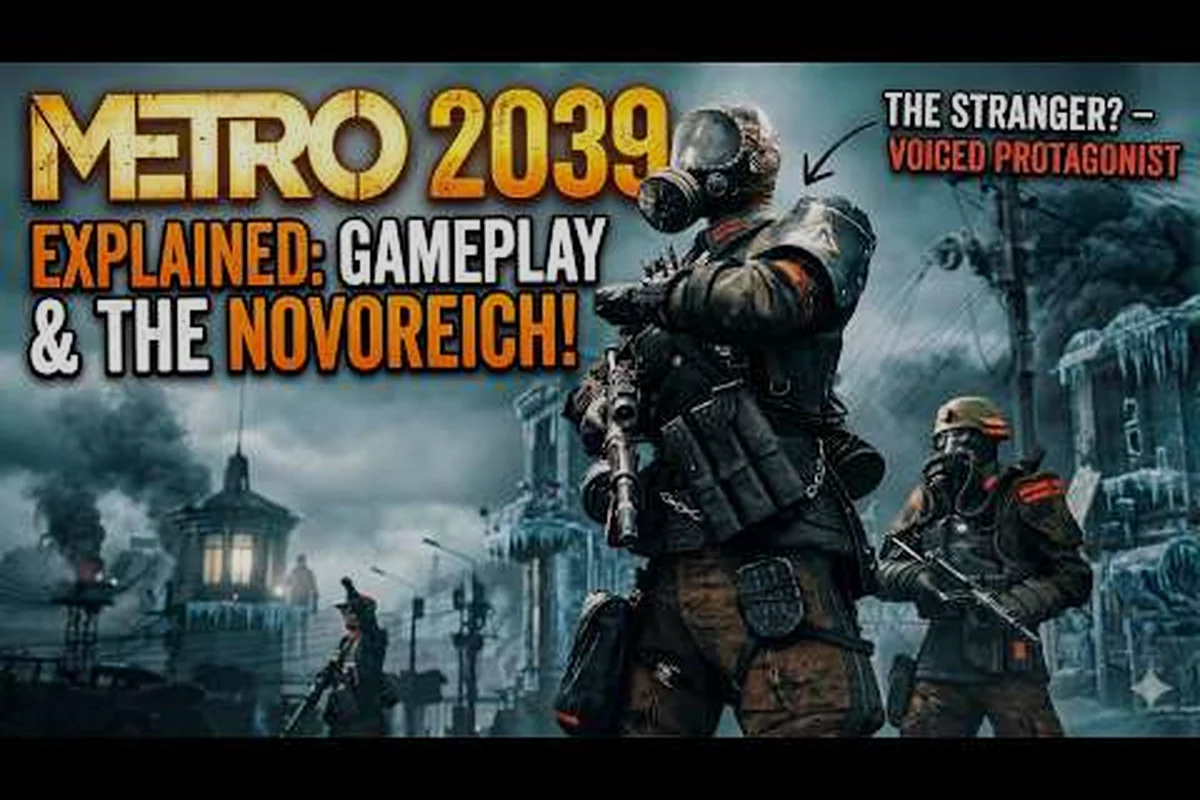
The metro 2039 faction war isn't just background noise — it's the engine driving every decision you make in the tunnels. Four years after Metro Exodus, the old independent stations have been crushed into a single authoritarian state called Novoreich, and the fragile alliances that once held the Metro together have collapsed into open conflict. Understanding who controls which tunnels, why the surface has become a new battleground, and how the metro federation fits into this chaos is the difference between surviving your first hour and restarting it. This breakdown covers the factions, the political fault lines, and the surface enemy that's forcing everyone to rethink their loyalties.
The Collapse of the Old Order and the Rise of the Metro Federation
The political map you remember from Metro 2033 and Last Light no longer exists. The Red Line, the Fourth Reich, Hansa, and Polis — those rival powers that kept each other in check for two decades — have all been absorbed or eliminated by Hunter's Novoreich regime. According to the Xbox First Look recap, the independent factions of the old Metro have been united under a fascist dictatorship led by a literal Fuhrer. That's not a loose coalition or a defensive pact; it's a forced merger backed by propaganda, secret police, and the threat of exile to the surface.
What makes this a genuine faction war rather than a simple conquest story is that the unification isn't complete. Pockets of resistance still operate in the forgotten maintenance tunnels and abandoned stations, and the union of metro that Novoreich claims to represent is more fiction than fact. The regime controls the major hubs and the trade routes between them, but it can't police every kilometer of track. That's where the player enters — as the Stranger, a recluse forced back into the Metro he swore never to revisit, caught between the regime's iron fist and the scattered rebels who refuse to kneel.
The Novoreich Power Structure
Hunter's regime isn't a single monolithic block; it operates through layered control that mirrors the old Soviet bureaucracy, turning every interaction into a political puzzle as much as a survival challenge. Beneath his personal authority sit the Novoreich Security Corps and the Metro Federation commissars, each layer wielding its own veto power over supply routes and station charters. For factions like the Union of Metro, this fragmentation is a double-edged sword: it prevents any single rival from consolidating power, yet it forces negotiators to bribe or outmaneuver three separate bureaucratic tiers—from district-level polithuro cells to the central logistics committee—just to secure safe passage through a single tunnel. During the 2039 surface war, this complexity became a tactical weapon, as Hunter's enemies found that defeating his soldiers in combat was easier than navigating the paperwork that controlled their reinforcements.
-
The Fuhrer's Inner Circle — Hunter's closest advisors, drawn from former Spartan Rangers and Red Line officers who switched sides when the regime consolidated power.
-
Station Commanders — Each major station answers to a local commander who reports directly to the capital. These commanders have broad authority over trade, conscription, and security in their territory.
-
The Propaganda Corps — A dedicated branch that controls information flow, manages the loudspeaker broadcasts, and stamps out dissenting narratives before they spread.
-
The Enforcers — The regime's secret police, responsible for rooting out resistance cells and punishing anyone who questions the Fuhrer's authority.
The metro federation concept that Novoreich promotes is essentially a one-party state wearing the costume of a coalition. It's a distinction that matters for gameplay because your reputation with individual commanders can shift based on how you handle encounters, even while the regime as a whole remains hostile to genuine change. For a deeper look at how the regime's propaganda machine shapes these interactions, the regime propaganda breakdown covers the faction reputation system in detail.
What Remains of the Old Factions
The pre-war factions haven't vanished entirely — they've gone underground, both literally and figuratively. Former Hansa merchants now run black markets in the neutral zones, ex-Spartan Rangers form the backbone of the resistance, and remnants of the Fourth Reich have reorganized as a xenophobic militia that hates Novoreich almost as much as it hates mutants. This fragmented resistance is where the real faction war lives, because every station you visit has its own loyalties, grudges, and secret agendas.
Tunnel Politics: How Control Shifts Between Stations
Tunnel politics in METRO 2039 operate on a simple principle: whoever controls the food, the filters, and the ammunition controls the people. Novoreich understands this better than anyone, which is why the regime has centralized resource distribution through a rationing system that rewards loyalty and punishes dissent. But that centralization creates vulnerabilities — a single disrupted supply line can destabilize an entire region, and the resistance knows it.
The political landscape shifts based on three main factors you'll encounter throughout the campaign: the Metro Federation's central command structure versus the Union of Metro's decentralized councils, the availability of filter resources at key junction stations like VDNKh and Paveletskaya, and the frequency of surface war raids that force factions to consolidate or fracture. Control isn't static—a single lost supply convoy can tip a neutral station into either faction's orbit, permanently altering your access to traders and safe routes.
| Factor | How It Works | Player Impact |
|---|---|---|
| Resource Control | Stations with working water pumps, mushroom farms, or ammunition workshops hold disproportionate political power | Choosing which station to help can tip a local conflict one way or another |
| Trade Routes | The regime taxes all commerce between stations, but smugglers and independent traders keep the black market alive | Your decisions about contraband affect your standing with both the regime and the resistance |
| Information Flow | Whoever controls the radio relays and courier networks shapes what people believe about the surface and the war | Passing or suppressing information changes how stations react to you |
What's striking about the tunnel politics in this game is how much it resembles real-world power dynamics. The regime doesn't maintain control through brute force alone — it uses economic pressure, information control, and the constant threat of the surface to keep people compliant. The surface war that's brewing isn't just a military campaign; it's a political tool that justifies the regime's authoritarian measures. When the enemy is at the gates, questioning the Fuhrer becomes unpatriotic.
The Resistance's Political Strategy
The resistance understands that they can't win a straight military confrontation with Novoreich's trained soldiers. Instead, they focus on undermining the regime's legitimacy through targeted strikes, propaganda counter-campaigns, and the slow work of building alternative power structures in the neglected stations. This is where your choices as the Stranger carry real weight — every mission you complete for one side or the other shifts the balance of power in ways that ripple through the rest of the game.
The Surface Enemy: A New Threat That Changes Everything
The biggest wildcard in the metro 2039 faction war is the surface. In previous Metro games, the surface was a radioactive wasteland where survival meant dodging anomalies and fighting off demons. In METRO 2039, the surface has become a contested battlefield, and there's a new enemy faction operating above ground that neither Novoreich nor the resistance fully understands. The official METRO 2039 website describes the game as a sequel set four years after Exodus, and the surface situation has clearly deteriorated in ways that the old factions never anticipated.
What we know from the gameplay reveal trailer and community analysis is that this surface enemy isn't just another mutant variant. It's an organized force with its own tactics, equipment, and objectives — a proper enemy faction surface presence that treats the Metro's inhabitants as targets rather than fellow survivors. The community reports suggest these surface forces have access to technology that neither the regime nor the resistance can match, which raises uncomfortable questions about who they are and where they came from.
Surface War Tactics and Implications
The surface war changes the strategic calculus for every faction underground. Novoreich can no longer use exile to the surface as a punishment, because the surface is now actively dangerous in a way that radioactive wasteland alone never was. The resistance sees an opportunity — if the regime is distracted by the surface threat, it leaves the tunnels more vulnerable to internal challenges. And the ordinary station dwellers, caught in the middle, are starting to question whether the faction war below is worth fighting when a bigger threat looms above.
| Surface Threat | Known Behavior | Faction Response |
|---|---|---|
| Scout Patrols | Small teams that probe tunnel entrances and map the underground network | Novoreich has fortified known access points; resistance uses them as early warning systems |
| Supply Interdiction | Attacks on surface scavenging parties and trade caravans moving between stations | Both factions are losing scavengers, which tightens the resource economy underground |
| Coordinated Assaults | Larger operations targeting specific stations or infrastructure | The regime has started conscripting station dwellers for surface defense, fueling resentment |
The surface enemy also complicates the moral calculus of the faction war. When you're fighting Novoreich soldiers in the tunnels, the lines are clear — they're the oppressors, and the resistance is fighting for freedom. But when a surface patrol attacks a station, you might find yourself fighting alongside regime soldiers against a common enemy. These moments of forced cooperation create some of the most tense and memorable encounters in the game, because they blur the ideological lines that the faction war depends on.
Fallout Factions and the New Political Landscape
The term fallout factions might bring to mind the post-apocalyptic politics of other game series, but METRO 2039's version is distinctly its own. The factions that emerge from the collapse of the old order aren't clean ideological archetypes — they're messy, contradictory coalitions shaped by survival needs, personal grudges, and the constant pressure of the surface threat. This is what makes the political landscape feel so authentic; nobody in the tunnels has the luxury of pure ideology.
The new political landscape can be broken down into several overlapping groups that you'll encounter throughout the campaign: the Metro Federation's centralized command, the Union of Metro's council-based autonomy, and the surface-war factions vying for control of the ruins above. These alliances shift as tunnel politics dictate temporary ceasefires, forcing you to navigate a fragile web of allegiances where a single wrong choice can trigger an all-out faction war.
-
Novoreich Loyalists — True believers in Hunter's vision of a unified Metro, willing to overlook the regime's authoritarian methods in exchange for order and security.
-
Reluctant Collaborators — Station dwellers who don't support the regime but cooperate because they fear the alternative. They're the majority, and their loyalty is fragile.
-
Active Resistance — The fighters who risk everything to undermine Novoreich. They're brave, but they're also divided among themselves about what should replace the regime.
-
Surface Survivors — A growing population of people who've adapted to life above ground, caught between the mutants, the new surface enemy, and the factions below.
-
Neutral Traders — Merchants and smugglers who play both sides and profit from the conflict. They're unreliable allies but essential sources of information and supplies.
What's particularly interesting about the metro federation concept in this context is how it's being redefined by the conflict. Novoreich claims to be the federation, but the resistance argues that a real federation would be a voluntary association of independent stations, not a forced union. This ideological battle over what the Metro should become is at the heart of the faction war, and your choices throughout the game determine which vision wins.
How the Faction Map Has Changed
The faction map in METRO 2039 looks very different from previous games. The old boundaries between Red Line, Hansa, and Reich territory have been erased and replaced by a simpler division: Novoreich-controlled zones, contested zones, and resistance-held pockets. But within those broad categories, there's enormous variation in how individual stations actually operate. Some regime-controlled stations are prosperous and well-defended, while others are barely holding on. Some resistance pockets are organized and disciplined, while others are little more than bandit camps flying a rebel flag.
For a comprehensive breakdown of how the old factions have been transformed under the new regime, the last light factions guide maps out which groups survived, which were absorbed, and which reinvented themselves in response to Novoreich's rise.
Surviving the Faction War: Tunnel Politics and Movement
Surviving the metro 2039 faction war requires more than good aim and a full gas mask filter. It requires political awareness — understanding who's watching, who's listening, and what your actions signal to the various factions. Here are the practical strategies that experienced players recommend based on early access and community testing:
Read the room before you act. Every station has its own political temperature. A station that appears loyal to Novoreich might have resistance sympathizers in key positions, and vice versa. Pay attention to how NPCs react to you, what propaganda is playing on the loudspeakers, and whether people are willing to talk openly or glance over their shoulders before answering questions.
Build a reputation, not a resume. Your actions in one station follow you to the next. If you help the resistance sabotage a regime supply depot, word will spread — and not just among the rebels. The regime's informants are everywhere, and they'll remember what you did. Choose your side deliberately rather than opportunistically, because flip-flopping will make both factions distrust you.
Use the surface war to your advantage. When the surface enemy attacks, it creates chaos that you can exploit. Regime patrols get called away, checkpoints get abandoned, and resistance cells get opportunities to move supplies or people. Timing your operations to coincide with surface attacks can give you windows of opportunity that wouldn't exist otherwise.
Stockpile resources that cross faction lines. Ammunition, medical supplies, and gas mask filters are valuable everywhere, but certain items are particularly useful as currency in faction negotiations. Clean water, working radio parts, and information about surface enemy movements are all worth more than bullets in the right circumstances.
Know when to fight and when to talk. The faction war isn't always resolved through combat. Sometimes the best outcome comes from negotiating a truce between two stations, or convincing a Novoreich commander that the resistance cell in his sector isn't worth the resources to eliminate. Your dialogue choices matter as much as your trigger discipline.
Loadout Considerations for Faction Conflicts
Different factions require different approaches in combat. Novoreich soldiers are trained, disciplined, and well-equipped — they'll punish frontal assaults and reward careful flanking. Resistance fighters are more unpredictable, mixing guerrilla tactics with improvised weapons. And the surface enemy operates with tactics that don't match anything you've seen from the tunnel factions. For a detailed breakdown of enemy weaknesses and effective engagement strategies, the enemy weaknesses guide covers the strengths and vulnerabilities of each faction's forces.
| Faction | Combat Style | Effective Counter |
|---|---|---|
| Novoreich Soldiers | Disciplined formations, heavy firepower, good armor | Stealth approaches, sniper positions, exploiting patrol gaps |
| Resistance Fighters | Guerrilla tactics, ambushes, improvised weapons | Aggressive push tactics, breaking their morale, cutting off escape routes |
| Surface Enemy | Coordinated assaults, advanced technology, unfamiliar tactics | Hit-and-run engagements, using terrain, avoiding prolonged firefights |
The key insight from community testing is that you can't build one loadout that works for every faction encounter. A silenced weapon that's perfect for eliminating Novoreich patrols quietly will leave you underpowered when a surface enemy squad catches you in the open. Consider carrying a versatile primary that can handle medium-range engagements, a reliable sidearm for close quarters, and enough throwables to create space when you're overwhelmed.
How Your Choices Shape the War's Outcome
The metro 2039 faction war isn't a fixed narrative — it's a dynamic conflict that responds to your actions. Every mission you complete, every faction member you help or betray, every piece of information you pass along shifts the balance of power. This is the game's core promise: you're not just a soldier following orders, you're a political actor whose decisions determine which vision of the Metro's future prevails.
The game tracks your standing with multiple factions simultaneously, and those standings affect everything from dialogue options to mission availability to the ending you receive. A player who consistently supports the resistance will see different story beats than one who works within the Novoreich system, and a player who tries to stay neutral will face different challenges than either. The union of metro that Novoreich promises and the metro federation that the resistance dreams of are both possible outcomes — and both have costs.
What makes this system particularly compelling is that there's no clearly "correct" path. The resistance fights for freedom, but some resistance cells are little better than the regime they oppose. Novoreich maintains order, but that order comes at the price of individual liberty. The surface enemy might be a genuine threat that justifies the regime's authoritarian response, or it might be a convenient excuse for consolidating power. The game doesn't tell you which interpretation is correct — it forces you to live with the consequences of your choices.
The Moral Weight of the Faction War
The most effective storytelling in METRO 2039 comes from the moments where the faction war forces you to make uncomfortable choices. Do you help a resistance cell that includes former Reich soldiers who committed atrocities under the old regime? Do you report a station commander who's skimming supplies to feed his family, knowing that the regime will execute him for corruption? Do you share intelligence about a surface enemy patrol with Novoreich, even though it will help the regime consolidate its power?
These aren't hypothetical questions — they're the kinds of decisions the game puts in front of you regularly, and they carry real weight. The faction war isn't a simple good-versus-evil conflict, and the game respects your intelligence by refusing to present it as one. Every faction has legitimate grievances and legitimate flaws, and the choices you make reflect your own values as much as they shape the game's outcome.
Frequently Asked Questions
What exactly is the metro 2039 faction war about?
The faction war in METRO 2039 centers on the conflict between Novoreich, a fascist regime that has forcibly unified the Metro's independent stations, and the resistance groups that oppose its rule. The war is complicated by a new surface enemy that threatens both sides, forcing players to navigate shifting alliances and moral compromises.
How does the metro federation differ from Novoreich?
The metro federation is the concept that Novoreich uses to justify its rule — a claim that the regime represents a voluntary union of stations working together. In reality, the federation is a one-party state maintained through propaganda, secret police, and resource control. The resistance argues for a genuine federation of truly independent stations.
Who is the enemy faction on the surface?
The surface enemy is an organized military force operating above ground with advanced technology and coordinated tactics. Community analysis of the reveal trailer suggests they're not mutants but a human faction with capabilities that neither Novoreich nor the resistance can match, making them a wildcard in the faction war.
Can I stay neutral in the faction war?
You can try to stay neutral, but the game's systems make it difficult. Your actions inevitably shift your standing with various factions, and key story moments will force you to make choices that align you with one side or another. True neutrality is possible but requires careful play and comes with its own challenges.
How do my choices affect the war's outcome?
Your choices determine which factions gain power, which missions become available, and which ending you receive. The game tracks your reputation with multiple factions simultaneously, and the political landscape shifts in response to your actions. Different playthroughs can produce dramatically different outcomes for the Metro's future.